Note: It’s now considered more polite to use Türkiye to refer to the country formerly known as Turkey. This is understandable because who would want to share a name with a big awkward bird?
Occasionally, crossing a land border is like suddenly stepping from one world into a completely different one. When we crossed from Iran into Türkiye, it was as if someone had just pressed ‘play’, and the sound went from mute to full volume. Iran is quiet and serene, and Türkiye is loud and noisy. Friendly conversations are shouted and everywhere is vibrant and lively with the constant sound of laughter and happy Türkish music.
We were totally unprepared when we emerged from the border crossing. There were no taxis, we didn’t know a word of Türkish, we had no Türkish money, and we didn’t know where we were going. With some universal sign language and good luck, we got a minibus to the nearby town of Doğubayazıt. We couldn’t pronounce it, so we called it ‘doggy bits’. I found out later that it was known as ‘doggy biscuit’ on the hippie trail because they couldn’t pronounce it either. It didn’t matter that we couldn’t speak Türkish because everyone speaks Kurdish here anyway. Mount Ararat floats above the town as if by magic. The largest peak of this dormant twin-peaked volcano is the highest mountain in Türkiye at 5,137 metres. It is a sight to behold and possibly the most beautiful mountain I’ve ever seen. It changes constantly, and I couldn’t take my eyes off it. No wonder the Christians believe it’s the resting place of Noah’s Ark.

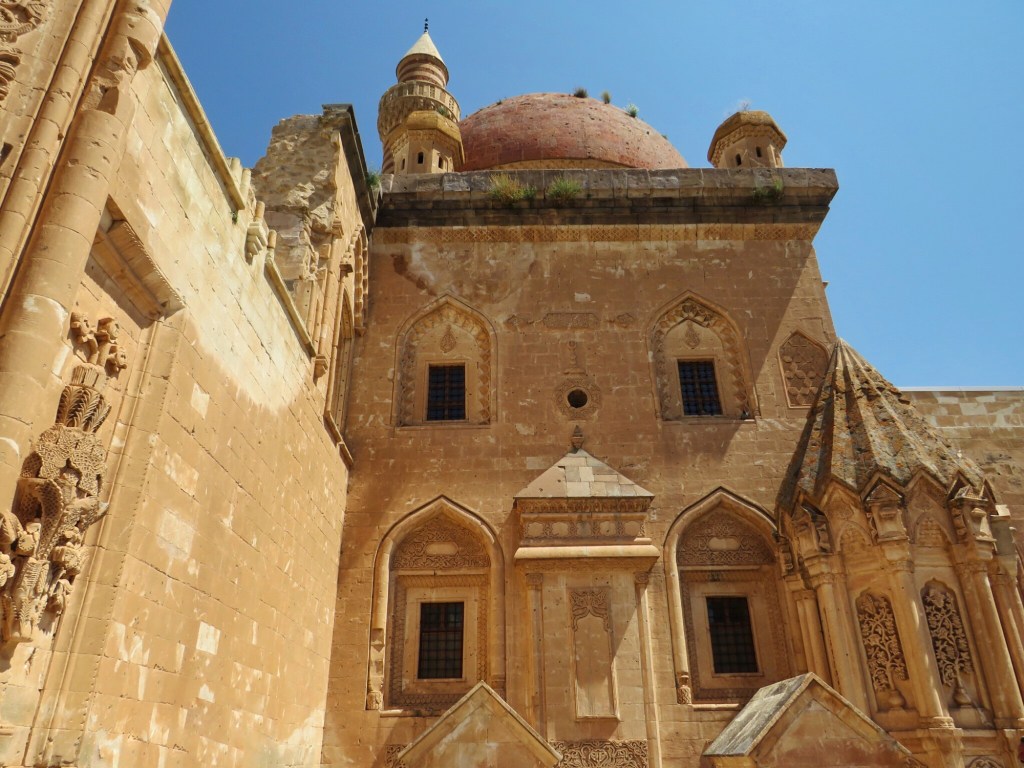
The old town of Bayazit (Daruynk) began around 800 BCE as a settlement in the ancient Armenian Kingdom of Urartu. It had a colourful and interesting history for almost 3000 years until 1930 when the Türkish army completely destroyed it in response to the Kurdish Ararat Rebellion, where Bayazit was briefly the provisional capital of a self-proclaimed independent Kurdistan. The town was rebuilt down the hill and renamed Doğubayazıt. The site of the original Bayazit is around 8km out of town and up the hill. Out here, in the middle of nowhere, is the abandoned 17th-18th-century Ottoman Ishak Pasha Palace. Its 366 rooms are a mish-mash of architectural styles that somehow blend harmoniously. If I could live in a palace, it would be this one.


I knew the Kurds were a persecuted people, but I didn’t know their story. I discovered they are indigenous to Mesopotamia, and their nomadic tribes roamed freely across this region (without borders) for millennia. Kurdistan (land of the Kurds) includes parts of current Iran, Iraq, Syria, and Türkiye. When the Ottoman Empire was defeated in World War I, the national borders were redrawn by the victors (mainly Britain and France). The Kurds were promised their own country, but they got ripped off, and it didn’t happen. This has made the Kurds the largest ethnic group in the world (30-40 million people) without their own country. Now, they are a minority in all of these separate countries. They are treated as second-class citizens everywhere and often don’t have basic rights such as citizenship or the right to own land or use their own language. More than half of Kurdish people live in Türkiye, making up 15-20% of the Türkish population. Kurdish independence movements, such as the Kurdistan Workers’ Party (PKK), are labelled terrorist organisations. The Kurdish people are understandably pissed off, making it an unsustainable tinderbox situation.
There’s not much else left to see of the old town of Bayazit. There’s the ruins of a 2,800 year old Urartian castle, the 16th-century Old Mosque, and the tomb of the 17th-century Kurdish poet Ahmedi Hani. A few old men were sitting in the shade. They pointed sadly at the ruins and sang us some Kurdish folk songs.

Transport in this part of the world is by big bus, minibus or taxi. We caught the big bus to Kars. The bus deposited us out of town on a deserted road. I was very annoyed and shouted a lot at the bus driver. He just waved cheerily and drove off, leaving us stranded. We flagged a taxi going the other way, over on the highway. He signalled something that we hoped meant he would come back for us. We sat down on the road to wait. We waited a long time. We’d just given up and started walking when, lo and behold, along came the taxi. I did some googling to see who I could complain to about the bus and came across this gem: “The official bus station is occupied by stray dogs, and no humans go near it.” I guess that explains it.
Bus saga aside, Kars is a lovely small city of around 90,000 people. It was the capital of the ancient Kingdom of Armenia in the 10th century. The population was predominantly Armenian until 1921, when, during the Armenian genocide, they were given the ‘option’ to retreat next door to within the present-day Armenian borders. Due to its strategic crossroads location, Kars has been fought over, captured, recaptured, and changed hands many times. Tamerlane completely levelled it in the 14th century. The Russians built most of the beautiful ‘Baltic style’ buildings of modern Kars in the 19th century.
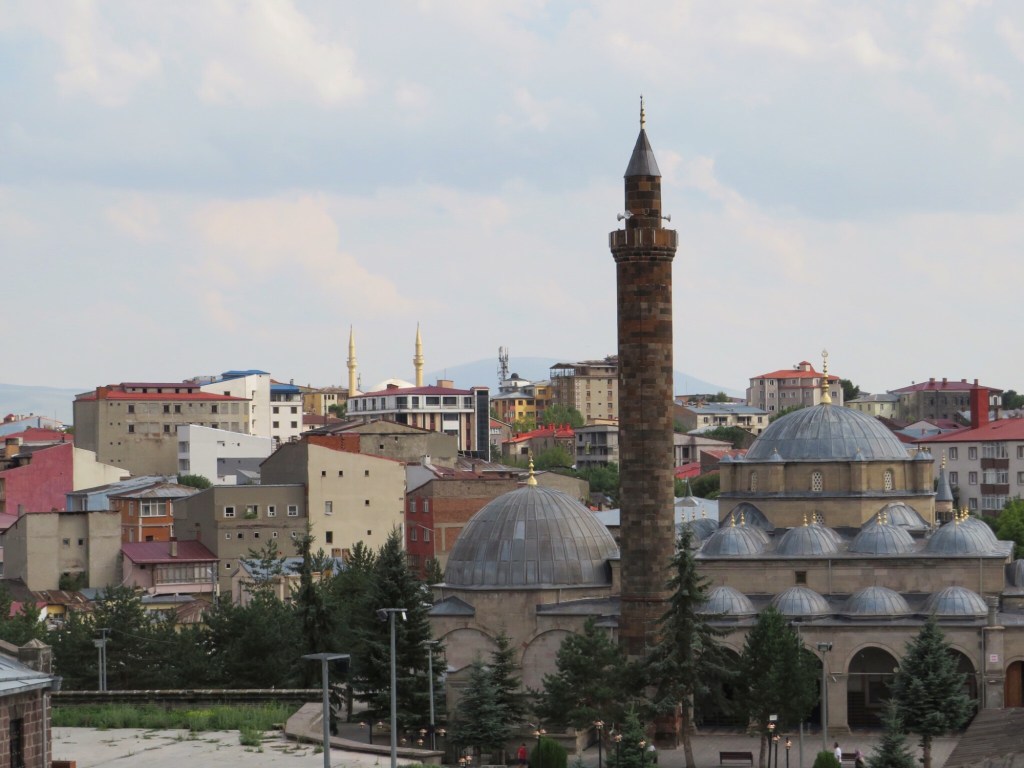
We got a small basic room on the 4th floor of the Kent Ani Hotel. Rampant inflation and economic problems in Türkiye have made accommodation expensive. The hotel is a bit shabby, but it’s been a traveller’s meeting place since the 1970s. It was a bit of a come down after the luxury of Iran, but we met some very interesting and eccentric people here. I got an infection in my leg (cellulitis) and spent a couple of weeks lying in bed trying to fix it with over-the-counter antibiotics. I was entertained by a small window looking out over the market, afternoon storms, and the very tuneful call to prayer from the nearby mosque. The local muezzin missed his calling as an opera singer. JH had to bring me food. He’s great at building and fixing things, but urban hunting and gathering is not his forte. Bless him. I didn’t see anything green for a fortnight and feared I’d get scurvy. My leg wasn’t getting better, so I had to see a doctor. The doctor gave me a prescription for strong antibiotics, and when I tried to pay, he said, “No money, you are our guest”. Imagine that happening in Australia, or the UK or the USA.
Finally, I was on my feet again and could go out to see the sights. I only had to walk down the street, and there was a magnificent castle overlooking the town. Kars Castle was built in 1153, destroyed by Mongol invaders, and rebuilt in 1579.

Approximately 45 km east of Kars are the UNESCO world heritage ruins of the Armenian capital city of Ani. The city dates back to at least the 5th century but came to prominence in the 10th century when the Armenian capital was moved here from Kars. In its medieval heyday, it had a population of 100,000 and was the centre of the Armenian world. It was known as the ‘city of 40 gates and 1001 churches’.
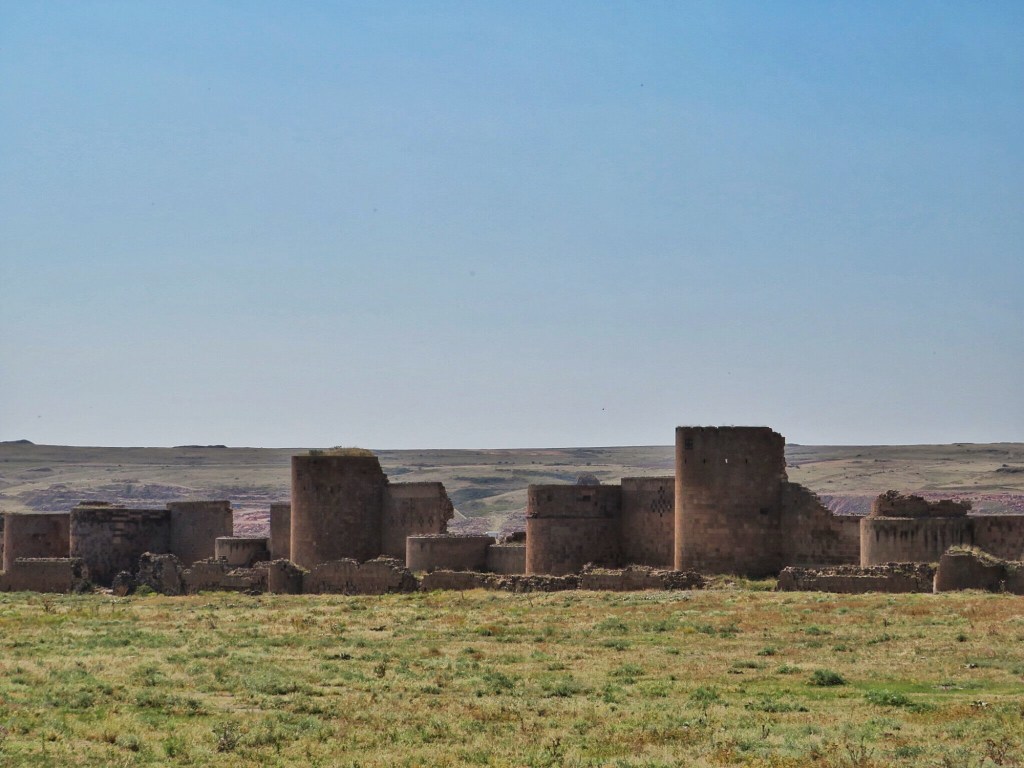
The story of Ani is a bit of a sad one. Due to devastating earthquakes, invasions, and changing trade routes, Ani gradually declined and was completely abandoned by the 17th century. It faded into obscurity and was forgotten for a few hundred years. Until recently, its haunting ruins were isolated in a no-go zone between Türkiye and the Soviet Union/Armenia. Although it’s now possible to visit, it’s still remote and right on the edge of a closed border.

There is a fairly famous train called the Doğu Express that starts in Kars and travels all the way to Ankara, stopping in Erzurum. It leaves Kars at 8 am, and since I’m not a morning person, we went to Erzurum by bus. Again, the bus dropped us off on the outskirts of town. JH was having a moment of madness where he refused to get a taxi and insisted we walk to find our hotel. I had a bad feeling about it. We walked and walked. Google led us around in circles, and we couldn’t find the hotel anywhere. I was tired, hot, thirsty and busting for a wee. We were almost at the point of verbal fisticuffs when we happened across an old men’s tea shop – one of those cafes with lots of small tables and men sitting around drinking tea and playing cards. We sat down and had tea – the most delicious tea ever. I asked if I could use the toilet. I could see they were uncertain about it, but let me go down the two flights of rickety stairs to the men’s toilet. There was no women’s toilet, just a big trough and a hole in the floor. I felt much better after that. An old man kept topping up our tea until we’d had our fill. When we went to pay, he just smiled and refused to take any money. Türkish hospitality is legendary. Now refreshed, we walked around the corner, and there was our hotel. Like everything, navigation is nine-tenths attitude.
Erzurum is the largest city in Eastern Anatolia, with around half a million people. It’s a beautiful, high-altitude city surrounded by mountains. Like most places in this part of the world, Erzurum has been occupied by many different empires, which are reflected in the diverse historic buildings.

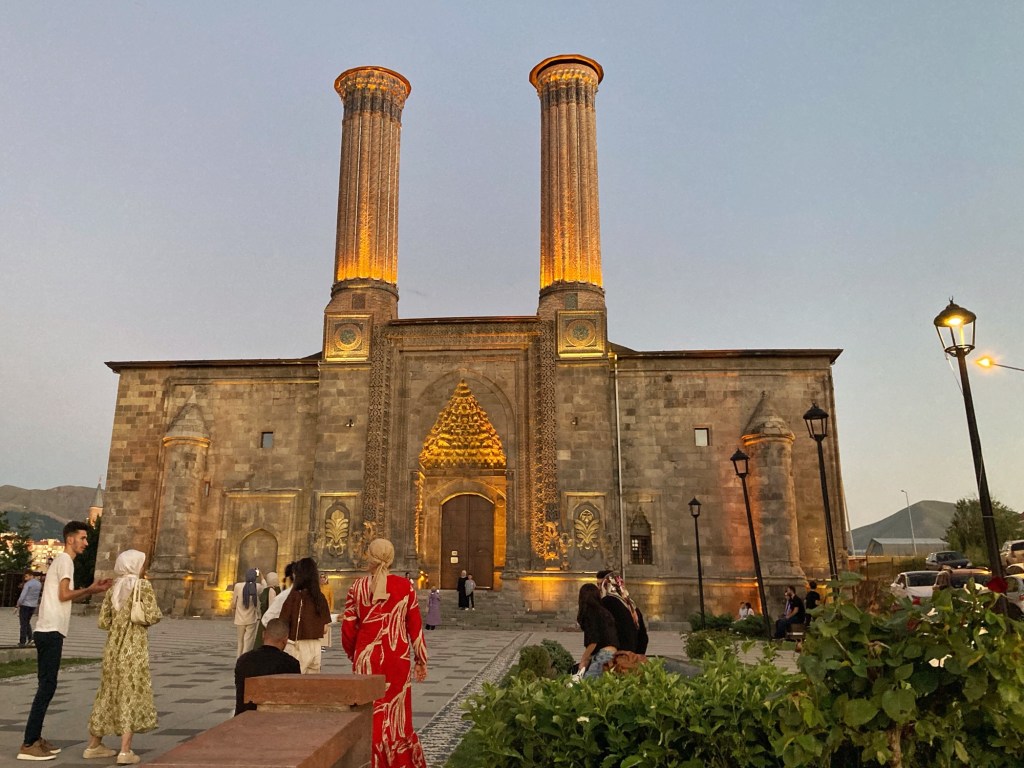
The 5th-century Byzantine city walls and Erzurum Castle are still standing, and there are stunning mosques and madrasas from various historical periods. Despite being a university town, it’s considered one of the most conservative towns in Türkiye, and most women wear Islamic dress. At night, everyone strolls along the tree-lined boulevards, eating at outdoor tables or buying ice cream or roasted corn from stalls in the many parks. Traditional restaurants serve a variety of foods in small dishes, like the Türkish equivalent of tapas and the delicious local dessert Kadayıf Dolması – a pastry with walnuts and syrup.
Neither of us has been to Türkiye before, apart from a long-ago day trip to Ephesus from the Greek Islands. All the famous tourist sites are in the south but we decided to avoid it because it would be crawling with holidaymakers in summer, and we were tired of being hot. Instead, we headed north to the Black Sea region (Karadeniz), where it would hopefully be cooler and less crowded. We started in Trabzon, an ancient port city. It was good to see the sea for a change.
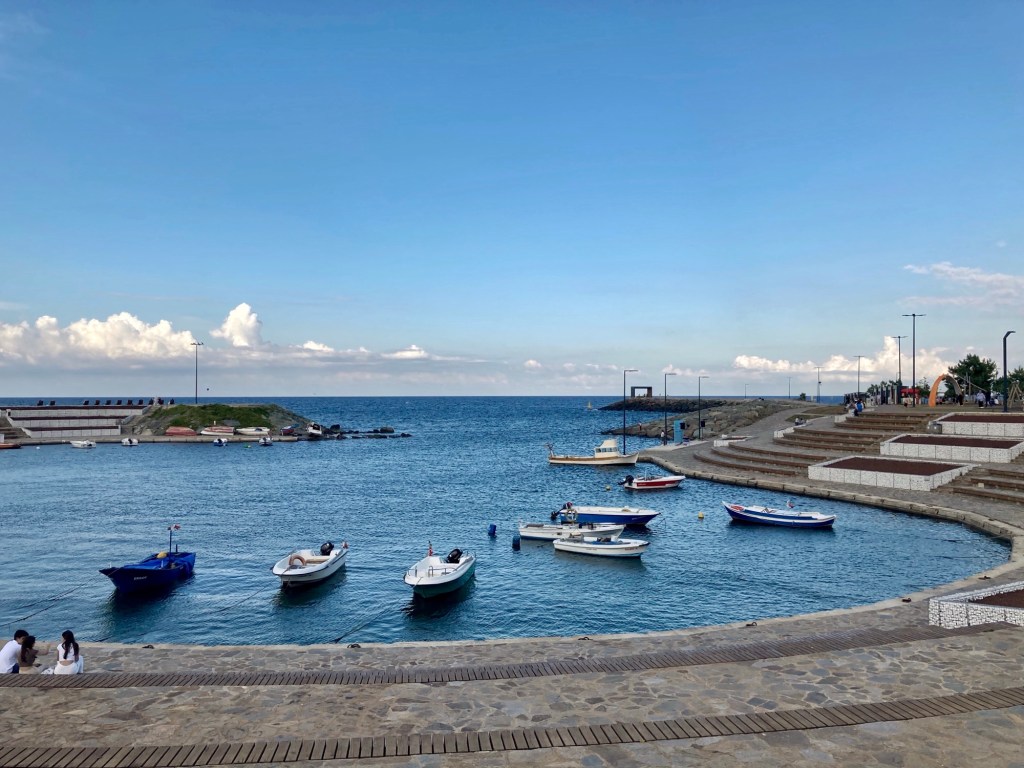
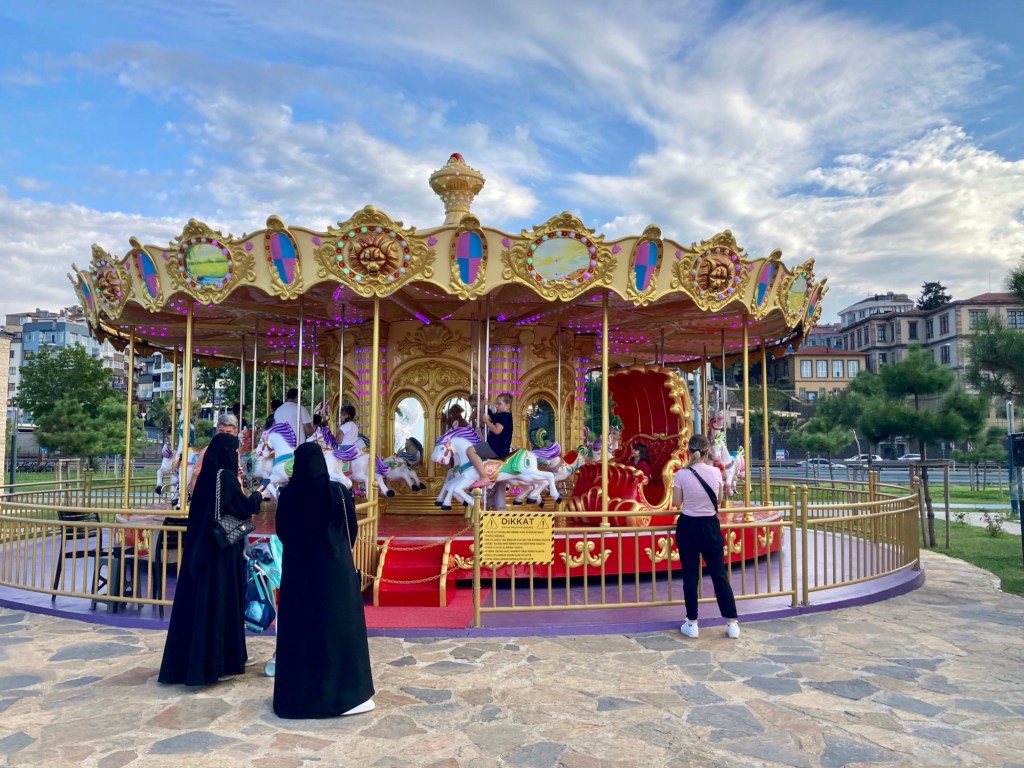
Trabzon has a completely different atmosphere to everywhere we’ve been so far. It has that buzzing summer holiday feel, but the tourists seem to be either locals or from the Middle East. A fascinating thing about many parts of Türkiye is the juxtaposition of secular and Islamic culture. It’s common to see two women side-by-side, one dressed in short shorts and a singlet top and the other wearing a chador. It’s kind of surreal. This region is famous for its hazelnuts and tea plantations. There are lots of good restaurants and many specialty shops selling fancy cakes and exquisite concoctions made of dried fruits and nuts. It was the first time in months we’d seen bars selling alcohol. It seemed quite weird. We’re like, “Oh my god, they’re selling alcohol!”.
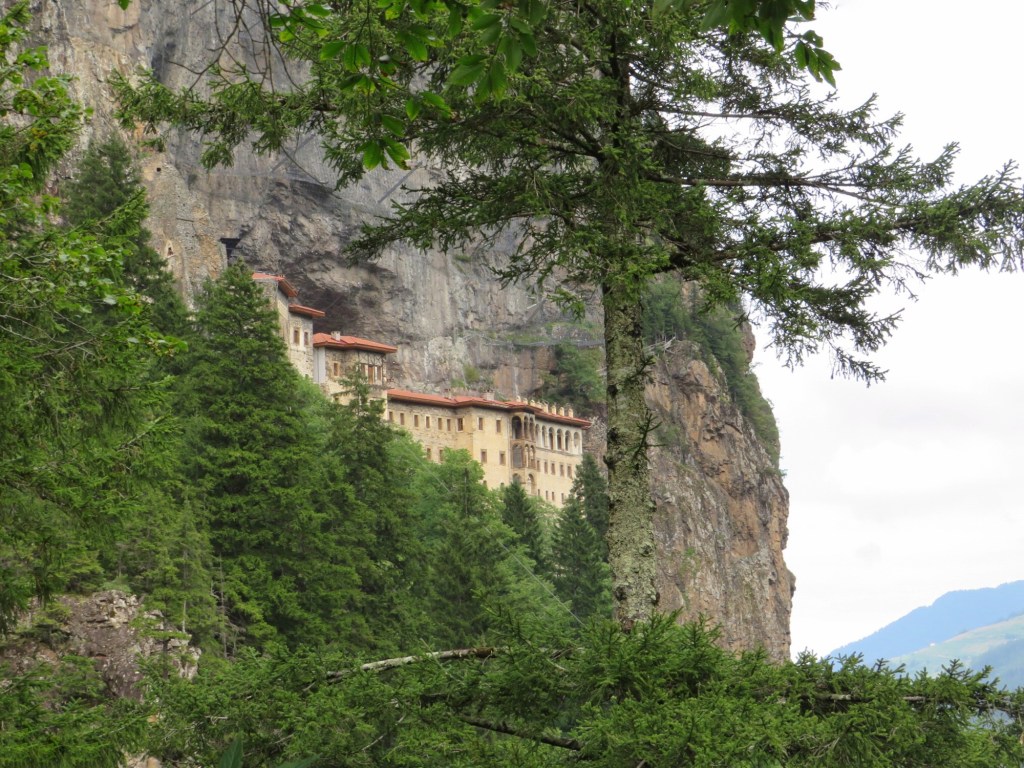
A 40-minute drive from Trabzon is the incredible Sumela Monastery. Started in the 4th century, it’s one of the oldest Christian monasteries in the world. The story goes that the Virgin Mary visited two priests from Athens (Barnabas and Sophronius) in a dream and told them to find an icon transported by angels in a particular cave up in the mountains. The priests found the icon 1200 metres up a vertical cliff and carved the original Rock Church out of the cave. The huge monastery grew from there, extending straight out of the mountain. It’s the location that makes it so unique. Now, there’s a steep path and hundreds of steps cut into the cliff, and it’s still hard going to get there. It is mind-blowing how they managed to get up there in the first place and how successive monks built this beautiful monastery on this impossible ledge.
Getting to the monastery is not easy, so we went on a bus tour. The tour was supposed to be a full-day tour to the monastery, then onto the Zigana Pass (a Silk Road crossing) and the Karaca Cave with stalactites, stalagmites, and travertines. We told them to let us out at the bus station after the monastery, and we’d find our own way back to Trabzon. We weren’t that interested in the other places and figured we’d probably want to escape by then. We ended up staying for the whole tour because the other people were so entertaining. Apart from a lovely Indian couple from Dubai, they were all Türkish, and they sang and clapped and danced with loud, infectious joy the whole way. The other highlight of the day was the discovery of Ezogelin soup made with lentils, grains and pepper. Mmmm. Delicious.

We bunny-hopped along the Black Sea Coast by bus, stopping here and there along the way. It’s comparatively lush and green with higher rainfall than other parts of Türkiye. The coastline is rugged, with steep cliffs tumbling directly into the sea from the high forested mountains. It’s a rural and friendly region with a local neighbourhood feel. Pretty villages have little cafés serving local produce, and colourful fishing boats bob in the bays and harbours. There are no crowds of tourists and no apparent signs of the package tours, big cruise ships or all-inclusive holiday resorts that are ruining so much of the world.

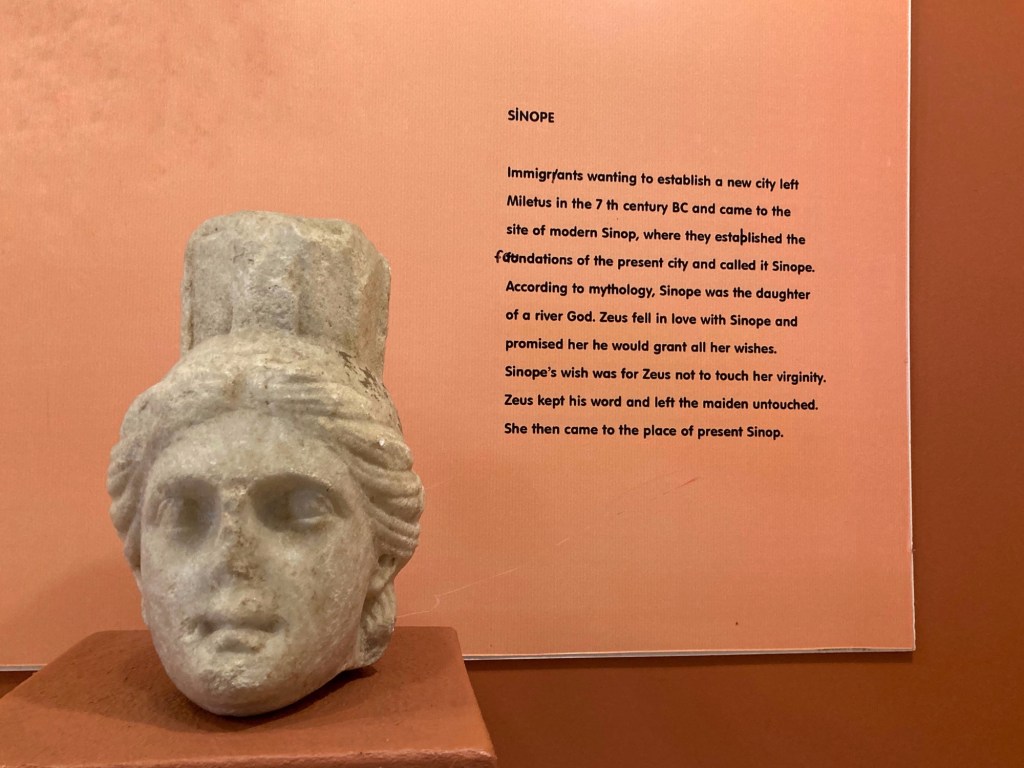
I think my favourite place along this coast is Sinop. It’s a pretty 2,500-year-old town built on a peninsula jutting out into the sea. It’s like an island joined to the mainland by a narrow spit, and you can walk all the way around it. Historic buildings are everywhere, including castles, towers and old city walls. In some places, the walls are slowly crumbling into the Black Sea.

Sinop has loads of atmosphere, and history feels very real here. It started as a Greek settlement (with links to Jason and the Argonauts) in the 7th century BCE. The ancient Greek poet and philosopher, Diogenes, was born here in 412 BCE. It was a colony of Julius Caesar, avoided destruction by Alexander the Great, and the Battle of Sinop was instrumental in the Crimean War. The Sinop Archaeological Museum is amazing and is packed with incredible local finds from every historical period. I could have gone back every day for a year.
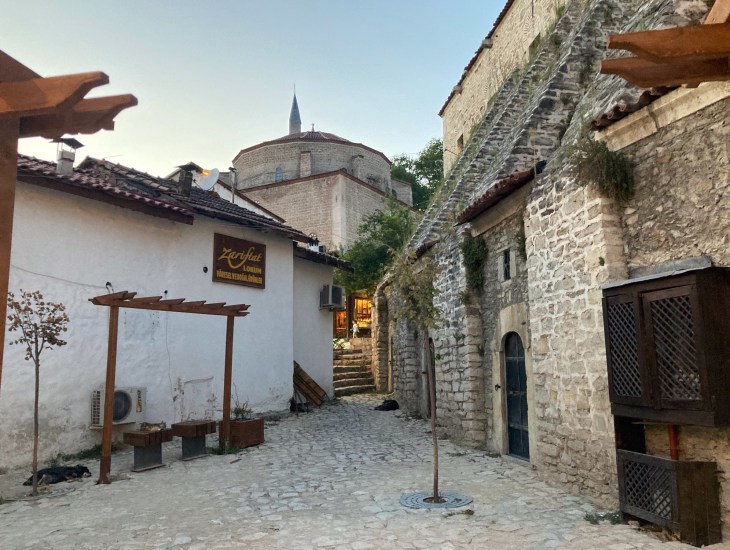
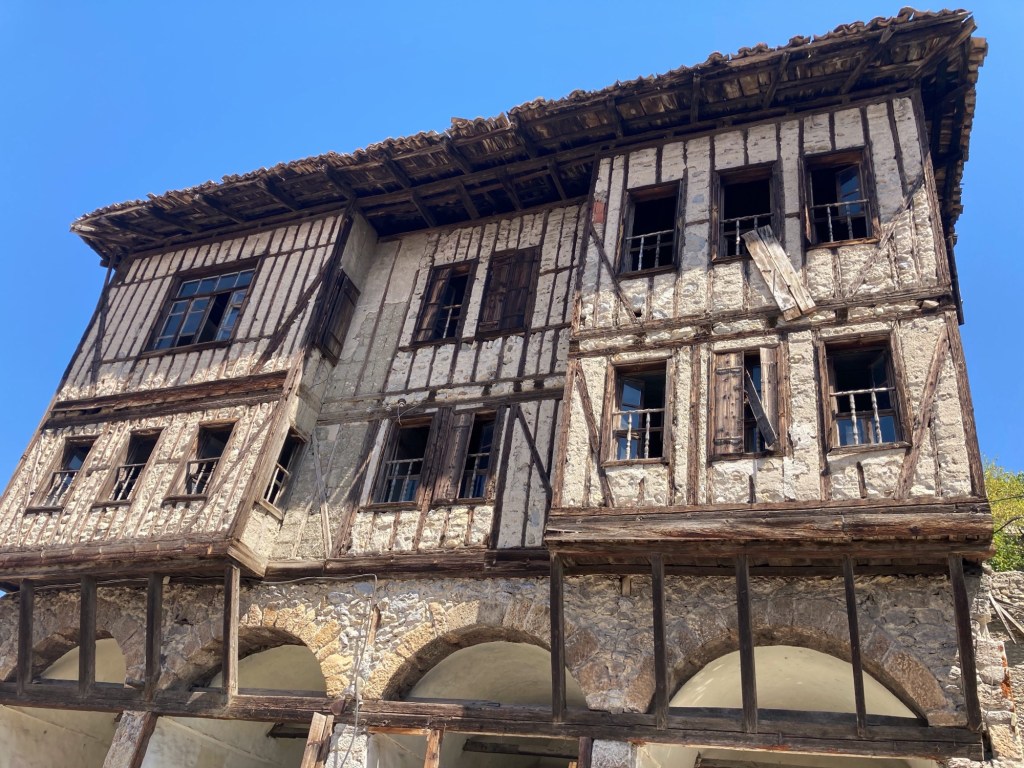
Having had our fill of the sea, we headed inland to the lovely town of Safranbolu. It’s famous for the saffron that grows here and the traditional Ottoman wood-framed houses with red-tiled roofs and carved wooden ceilings. The old town (Çarşı) is UNESCO World Heritage because of this distinct architecture. We stayed in one of these houses at the top of the hill with a wooden balcony overlooking the old town.

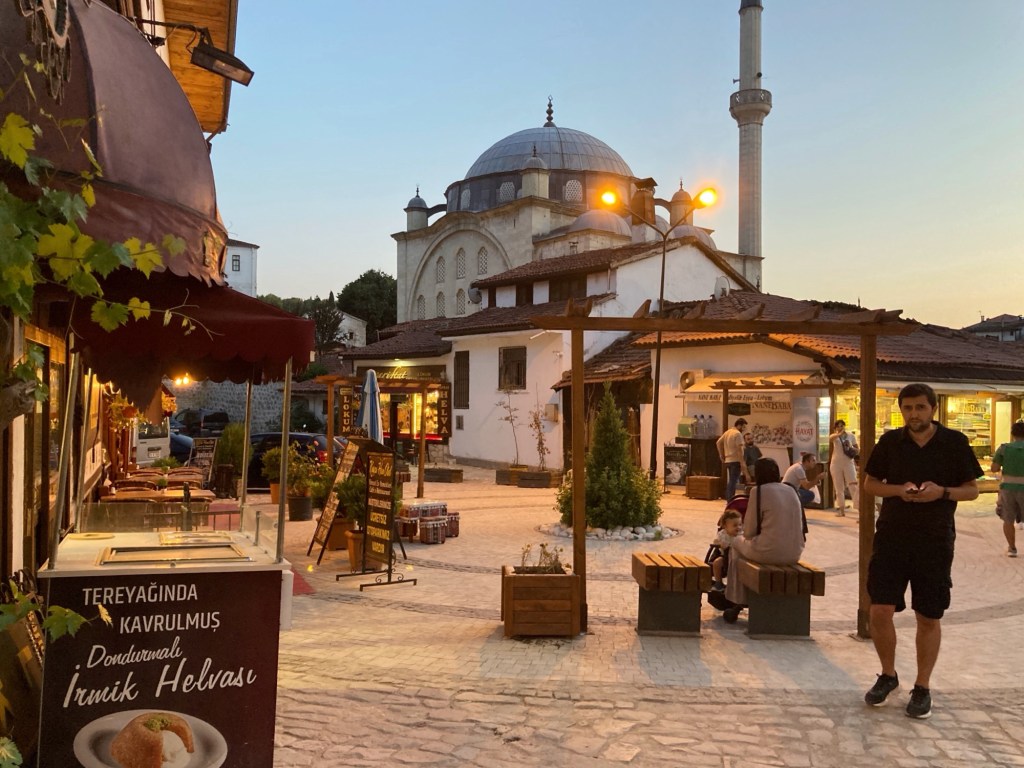
A few times each day, we wandered down the cobblestoned streets into the picture-perfect markets, meandered around the fascinating shops, ate lots of excellent food, drank loads of delicious Türkish tea with saffron, and then huffed and puffed our way back up the steep hill.

Sakarya is about halfway to Istanbul from Safranbolu – a convenient stopover point. It was originally called Adapazari and has a long history but was devastated by an earthquake in 1999, so there’s not much trace of this left. The only thing I could find was the Bridge of Justinian, an old 6th-century Byzantine stone bridge. Unfortunately, it’s fenced off for repairs, and we couldn’t get close enough to see it properly. Sakarya is now a thriving, rebuilt modern city of over a million people. It’s an agricultural and industrial centre with a huge university, nearby mountains, the Sakarya River, and the massive Sapanca Lake.

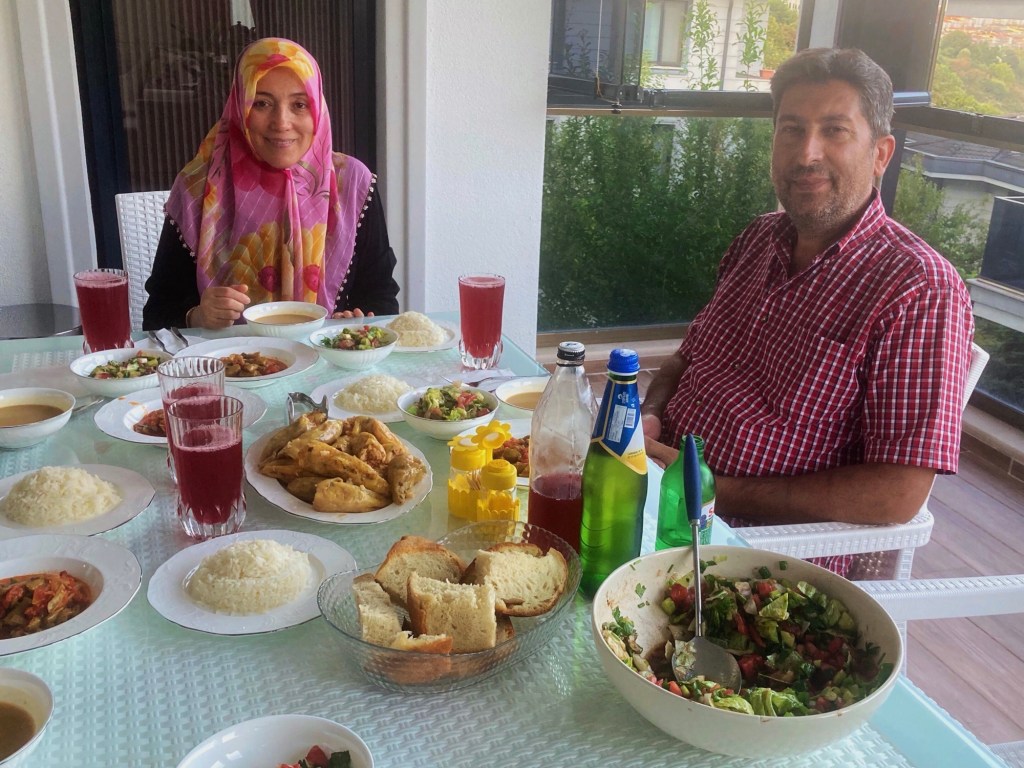
The other reason to visit Sakarya was that we were invited by some lovely people we met in Ani. Fatima is a history teacher and Mahmut is a university professor. They made us feel so welcome and gave us a fascinating grand tour. Fatima is an incredible cook who served us up delicious traditional feasts. Türkish hospitality is something else.
Istanbul is one of the world’s greatest cities, and I’ve wanted to come here forever. Originally called Lygos, then Byzantium, then Constantinople from the 4th century until it became Istanbul in the 1920s, it’s been an important city for over 2,500 years. It’s just as beautiful, exotic, and fascinating as I imagined. I knew we couldn’t see it all in a single short visit, so we picked a central spot to stay in Sultanahmet, within walking distance of many of the main attractions. The twin jewels in Istanbul’s crown are the two distinctive mosques – the Hagia Sophia and the Blue Mosque. The Hagia Sophia was a church for a thousand years before being converted to a mosque around 500 years ago.
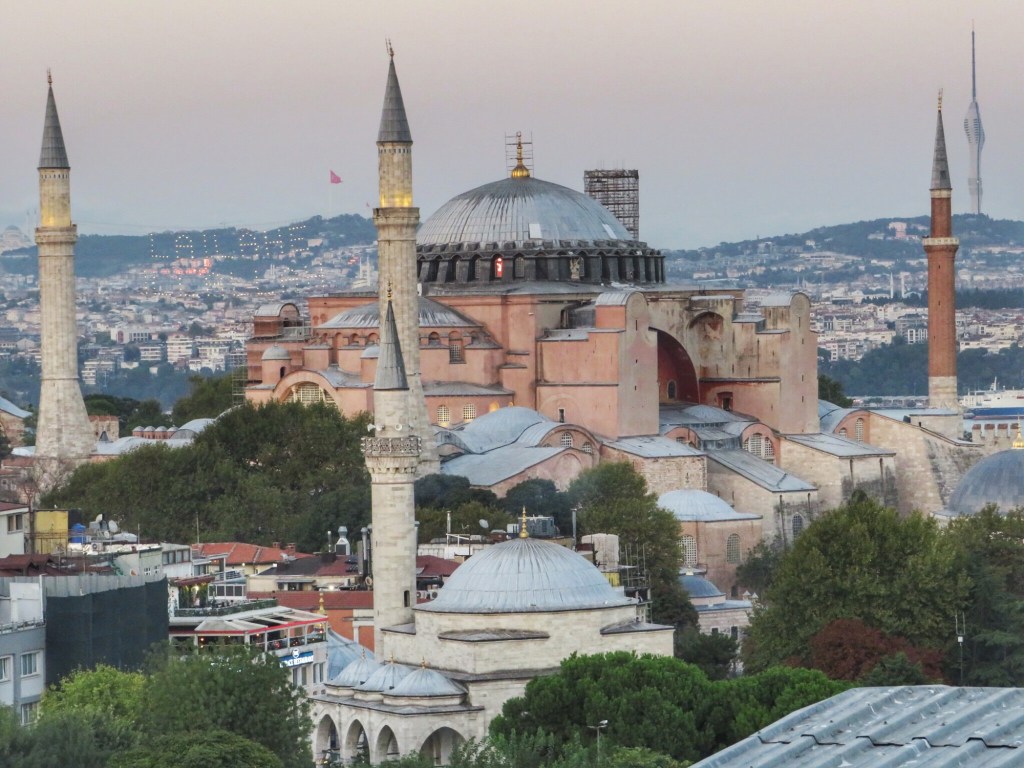
Istanbul is a mega city of over 15 million people plus millions of tourists. It’s crowded and the traffic is horrendous. However, it’s totally worth it. We went on the obligatory sunset cruise on the Bosphorus Strait that separates Europe from Asia. Even being trapped in a tacky boat with a zillion other tourists couldn’t spoil the otherworldly beauty of watching the magical city float by bathed in golden light.

There is so much to see and do in Istanbul. The Grand Bazaar is over 500 years old and one of the largest covered markets in the world. It’s huge. I found it a bit too crowded and touristy, but there were lots of pretty shiny things I wanted to buy – carpets, ceramics, textiles, copper and brass pots. Once we’d bought a few tiles and some apple tea (my favourite tea in the world), there wasn’t a sliver of space left in our packs. One of the most incredible sights is the Basilica Cistern, a subterranean water cistern built in the 6th century, apparently by 7000 slaves.
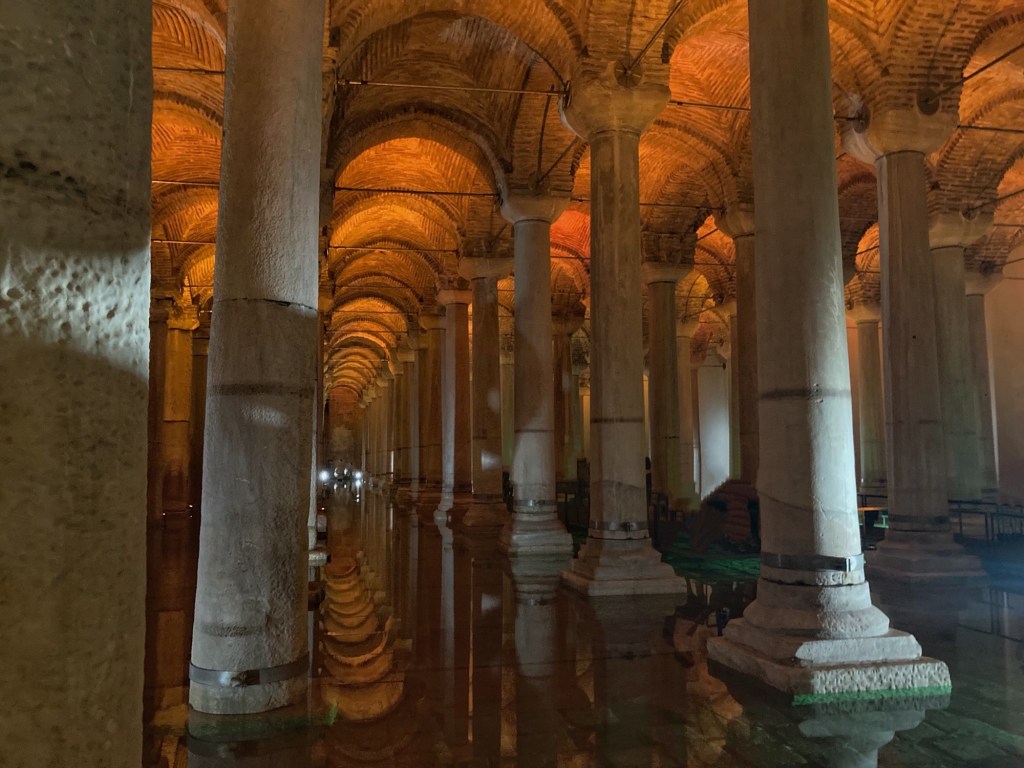
Two columns in the cistern are held up by the heads of Medusa, the Gorgon in Greek mythology with snakes for hair. In one, she’s upside down, and in the other, she’s on her side. This is presumably because, according to the legend, anyone who looks at her will turn to stone. It’s probably just propaganda.

The Oriental-Gothic-style Serkeci Station was the final stop on the Orient Express train from Paris to Istanbul, which ran from 1883 to 1977. On the old platform, there’s a very interesting one-room museum.

Since you can no longer ride the Orient Express, we caught the overnight Istanbul to Sofia Express instead. Sometime during the night, we crossed the border into Bulgaria. I was so comfortable that I didn’t even wake up for it and must have handed my passport over in my sleep. I loved this trip across Türkiye. It’s a wonderful country, and there’s so much more I want to see. For now, though, I’m excited to be ‘home’ in Bulgaria.

 Adventurous Hermit
Fantastic write up! I have read quite a few books over the years that are set in east of north Turkiye, its a region i would love to explore.
LikeLiked by 1 person
Thanks Anna 🙂. It’s a lovely region.
LikeLiked by 1 person
Love your blogs! Great trip!
Glad you got the cellulitis under control. V painful.
Steve
LikeLiked by 1 person
Thanks Steve 🙂x
LikeLike
Brilliant! Your ability to educate, and provide a wonderfully vivid and evocative atmosphere makes your blogs a joy to read. Thankyou Jeanne!!
LikeLiked by 1 person
Thank you so much Suzie xxx
LikeLike
oh Jeanne I love hearing about your adventures in Turkiye. The people sound so generous and kind. Can’t wait to hear more from you!! Liz xxx
LikeLiked by 1 person
Thanks Liz xxx
LikeLike
This was such a rich and honest account — full of those threshold moments where geography, language, and history all seem to shift underfoot. The contrast between Iran and Türkiye at the border was especially striking — that sense of the world suddenly turning up its volume felt very real.
I appreciated the way you wove in history without lecturing — especially around the Kurds and Armenians. These places carry heavy pasts, and you acknowledged that weight without letting it overwhelm the lived, often funny details of travel. “Doggy bits” and the tea shop toilet moment both made me laugh out loud.
There’s something deeply human in the way you move through these landscapes — curious, unpolished, open to chaos. It reminded me that travel isn’t just about what we see, but how places see us in return.
Thanks for this — a beautiful, messy, layered piece of writing.
LikeLiked by 1 person
Thank you so much for your thoughtful comments. It’s very much appreciated 🙂
LikeLiked by 1 person