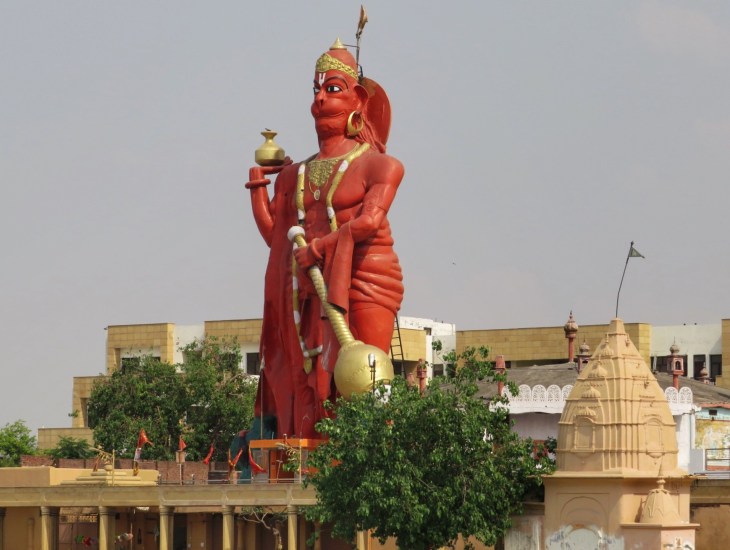
Somehow, more than two years have sneaked by since my last blog post from Ukraine, just before all hell broke loose there. It was still Covid times when we got back to Bulgaria and we’d barely had time to unpack when Australia opened it’s borders. We seized the chance and made the mad dash ‘home’ to Australia, in case the borders closed again. Back at home base, I breathed in the forest, settled into hermit mode, and time passed differently. Finally, we’re out and about again, into a changed world.
It’s a quarter of a century since I was last in India but as soon as I stepped off the plane it felt like yesterday. I think everywhere changes you a little bit, if you’re open to it, but India can change you deeply and profoundly. There’s nowhere else quite like it. I was afraid it might be drastically different after all these years but I was relieved to find the same kaleidoscope of colour and chaos it’s always been.

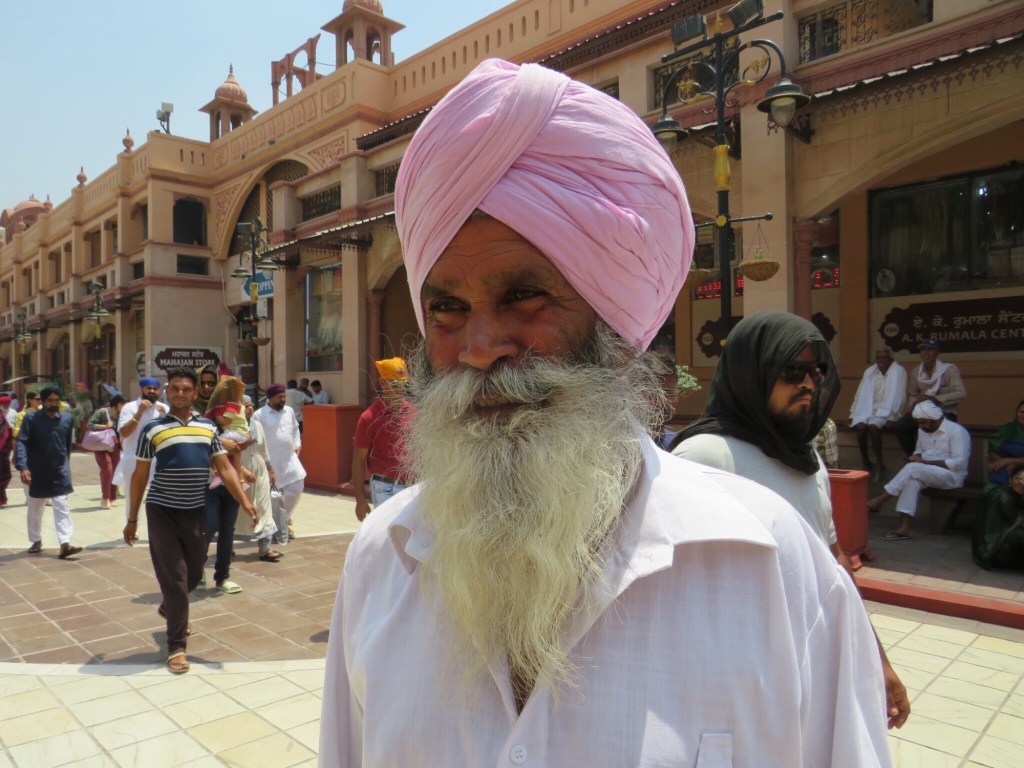
For JH, it’s his first time in India, although he’s been all around the edges – Bangladesh, Nepal, Pakistan. It was an easy landing in Amritsar (Punjab) with no immigration hassle or crowds at the airport. It’s the first time I’ve been to this area and I like it! Amritsar is a really lovely small city of only around 2 million people. It’s not overwhelming but is a swirl of bustling markets, colour, noise, and motion. I could live here.

Walking through the streets is entertaining rather than hassly (mostly). “Ma’am, ma’am! You want chai? Chapati? Roti? Come, eat! You want sari, dupatti? Come, come! Look, see! Cotton, all silk, good quality, best quality! I show you! You want rickshaw, madam? Taxi? Punjabi food, best food! Madam, you buy my [this]!” I cannot resist the big beautiful pleading brown eyes of the small boys selling fridge magnets. “Look madam, only 100 rupees. Look, no shoes. I need shoes. Please, ma’am!” My backpack is full of tacky fridge magnets.

Amritsar (which means ‘Holy Tank of Nectar of Immortality’) was established as a holy city by the Sikh Guru Ram Das in the 1500s. The land was purchased from an existing village with money donated by the Sikhs. It was destroyed by an Afghani invasion in the 1700s and again rebuilt with donations. The beautiful Golden Temple is the heart and spiritual centre. The whole old city area of lively bazaars surrounding the temple is holy, and tobacco and alcohol is prohibited.

I didn’t know much about Sikhism before but I’m impressed by what I’ve found out. It’s the fifth largest religion in the world with around 25 million followers. ‘Sikh’ means ‘learner’ or ‘disciple’ and they follow the teachings of a series of enlightened gurus. For over 500 years they’ve believed in the absolute equality of all people, regardless of class, gender, race, ability or religion. They believe in earning a living by honest means and sharing what they earn with others.
The Sikhs practice what they preach and feed up to 100,000 people per day at the Golden Temple, and many more at other temples (gurdwaras) around the world. The meals of rice, dahl and chapati are free to anyone who takes their shoes off and comes in. There are very few beggars in Amritsar. It feels very peaceful and uplifting in the temple, with the cool feel of marble under your feet, surrounded by thousands of pilgrims who believe in and do good things.
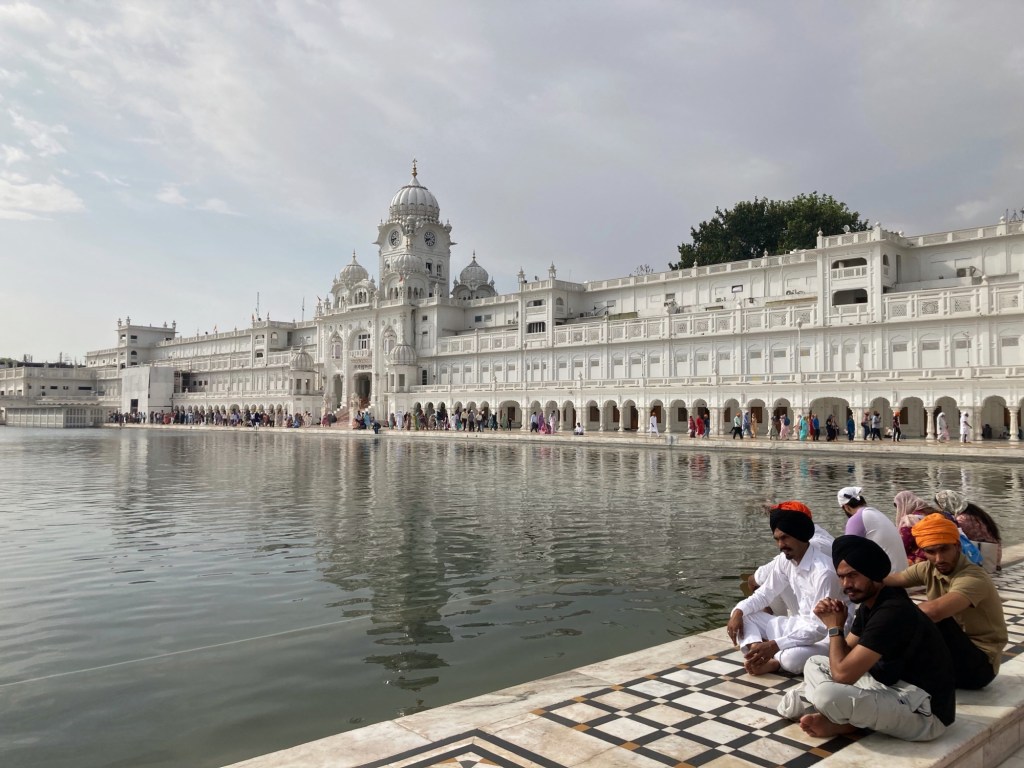
There are many other beautiful old buildings in Amritsar – carved gates and arches, mansions, forts and Hindu temples.

The good people of Amritsar were treated appallingly by the British. In 1919 a large crowd gathered in Jallianwala Bagh. Some were attending a fair and others had come together for a peaceful pro-independence protest. The British army blocked off the only entrance and fired continuously at the crowd, killing thousands of innocent people who couldn’t escape.
After visiting the scene of this crime, we went to the Partition Museum and were both completely horrified. I knew the basic facts about the division of India and I’d read some books, like Ice-Candy Man (Bapsi Sidwha) and Midnight’s Children (Salman Rushdie), but the museum made it very personal and real.
The parting shot from the British Raj, when they left India in 1947, was to split Mother India into three separate countries. Muslims to the left (Pakistan) and the far right (Bangladesh), and Hindus and everyone else in the middle (India). This was done hastily and with little warning. Virtually overnight, people found themselves in the wrong camp. This led to the biggest migration in human history, as 25 million people left everything behind and scrambled to get into the right country, based on their religion. Over a million people died.
The museum has real footage and photos plus hundreds of interviews with survivors. What a nightmare! The repercussions will continue for many generations. We left with tears in our eyes and a big dose of cultural shame.

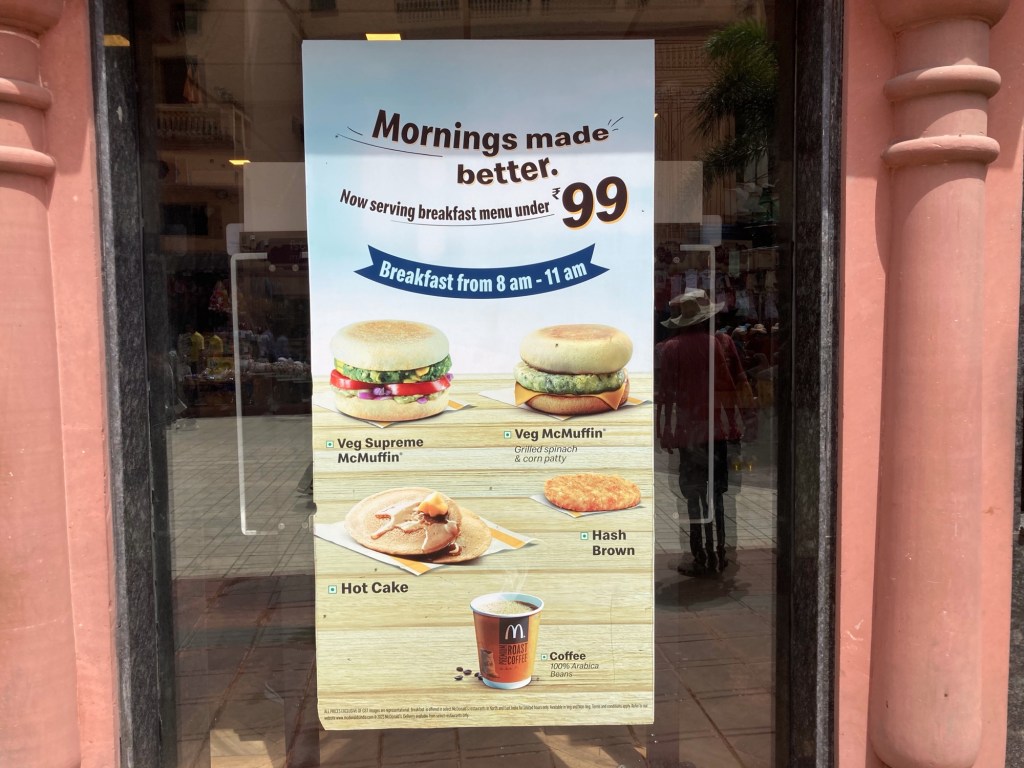
On a brighter note, it’s so good to be in a civilised country where vegetarian food is the norm and meat-eating is an aberration. You can assume that everything is vegetarian, unless told otherwise. Even Maccas is vegetarian.
The wonderful people at our hotel in the old city temple area, ‘Hotel City View with Garden’, were on a mission to make sure we tried all the best of Punjabi cuisine. Every morning we were served a feast of different foods – Kulcha, Aloo Paratha, Chole, Dal Makhani, Baingan Bharta and my favourite – Poha! Poha isn’t originally from Punjab but it’s commonly eaten here for breakfast. It’s the most delicious mixture of beaten/flattened rice flakes cooked with mustard seeds, curry leaf turmeric and other spices, potatoes, peas and onion, then mixed with dried fruit and nuts. Yummo.
The Hotel City View with Garden doesn’t actually have a city view, or a view at all. Most rooms don’t even have a window. The garden is a tiny square of plastic grass, big enough for two small tables and chairs. Somehow, the warmth of the people, a ceiling fan and a few well-placed pot plants, transforms it into a welcoming sanctuary.

As soon as you step out into the street from the sanctuary of the hotel, you’re hit by a wall of sound. Everyone is shouting or singing or chanting, clapping their hands, banging their pots and tooting their horns. They’re a noisy bunch! It makes me laugh out loud with joy at the exuberance of it all.
We caught the train to Chandigarh. We went 2A (second class with aircon) because the ticket seller looked at us and said “I think second class is good for you”. Why not first class, I wondered later? We must look like second class people. It seems like nothing has changed at all when it comes to Indian train travel. It’s the same stacks of slightly grubby bench seats that you can lay down on, with even grubbier curtains for privacy, that I remember. The Chai Wallah still marches up and down the corridors, selling tea, and shouting “Chai, chai, chai-ah!”
The trains are surprisingly comfortable. I wrapped myself in my shawl and settled in for a good nap and a read of my (very good) book The Henna Artist (Alka Joshi). A wonderful book about Indian train travel is Third Class Ticket (Heather Wood and Beryl Saunders). The most insightful book I’ve ever read about India, though, is A Handful of Rice (Bharati Mukherjee).
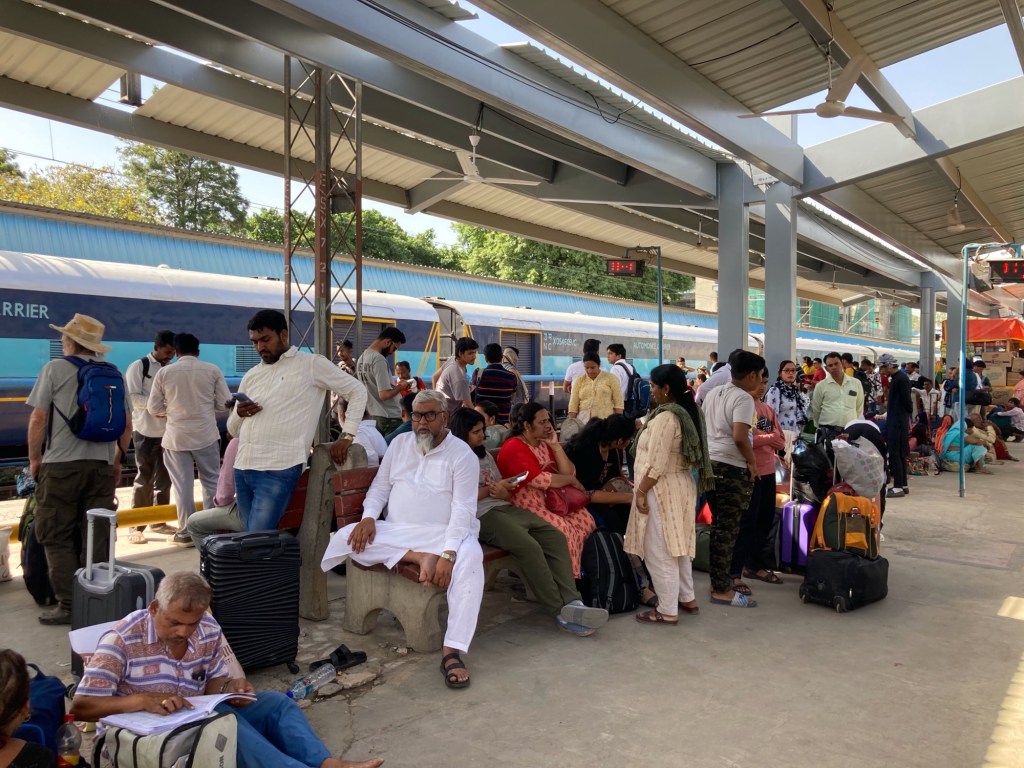
India is a country of extremes. You get the best of things and the worst of things. Sometimes, our accommodation is basic, shabby and nothing works – the shower is a bucket of cold water and there’s a mish-mash of electrical wires running nowhere. Occasionally, it’s like staying in something straight out of the Raj.

Chandigarh is a pleasant, cleverly planned city, built in the 1950s. It’s designed around separate sectors. Every sector has its own shopping and service precinct. There are lots of trees, gardens, wide streets and good restaurants. It’s indexed as the happiest city in India. It just goes to show the power of proper urban planning. There was only one reason I wanted to come to Chandigarh and that was to see Nek Chand’s famous Rock Garden. Nek Chand was a government worker who spent 60 years creating an incredible 18-acre landscaped sculpture garden out of construction and household waste.
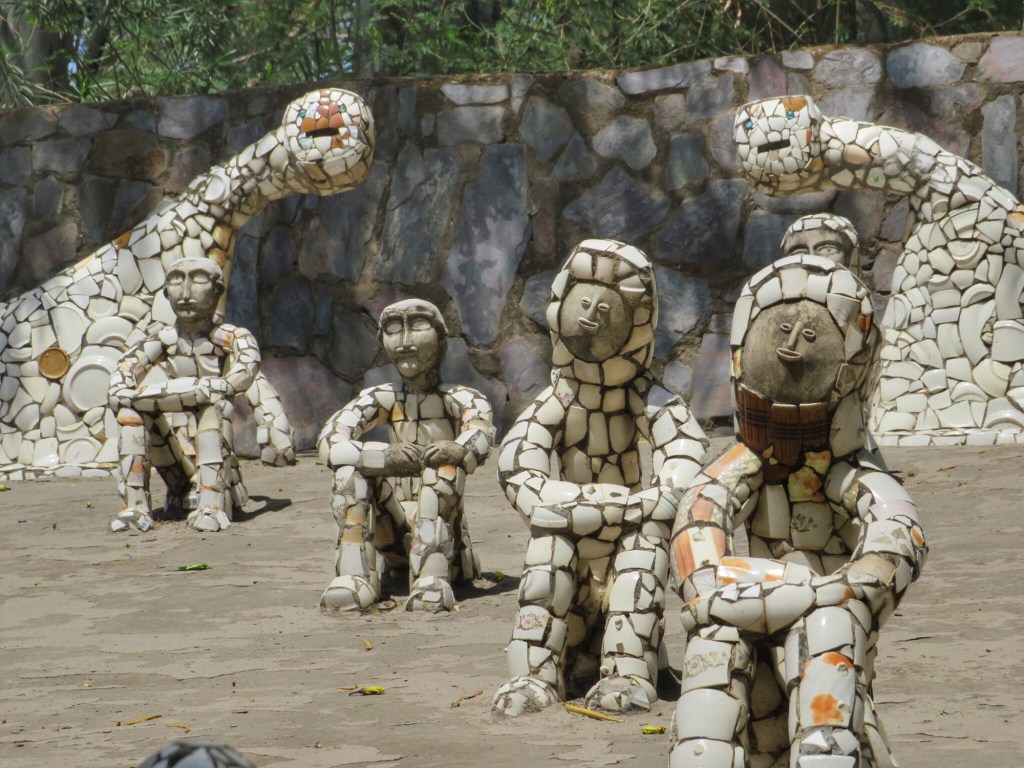
There are thousands of sculptures and each one is unique. It’s one of those places that make you go ‘wow’.

From Chandigarh we went to Patiala, a small city that was once a powerful royal capital in the Sikh dynasty. Its magnificent buildings are falling into ruin, but the incredible architecture still takes your breath away. The city is built around the exquisitely beautiful and absolutely MASSIVE Qila Mubarak (fortress).

Most of the Quila Mubarak is boarded up and deserted but there are workers in some sections, so hopefully they’re trying to save it.
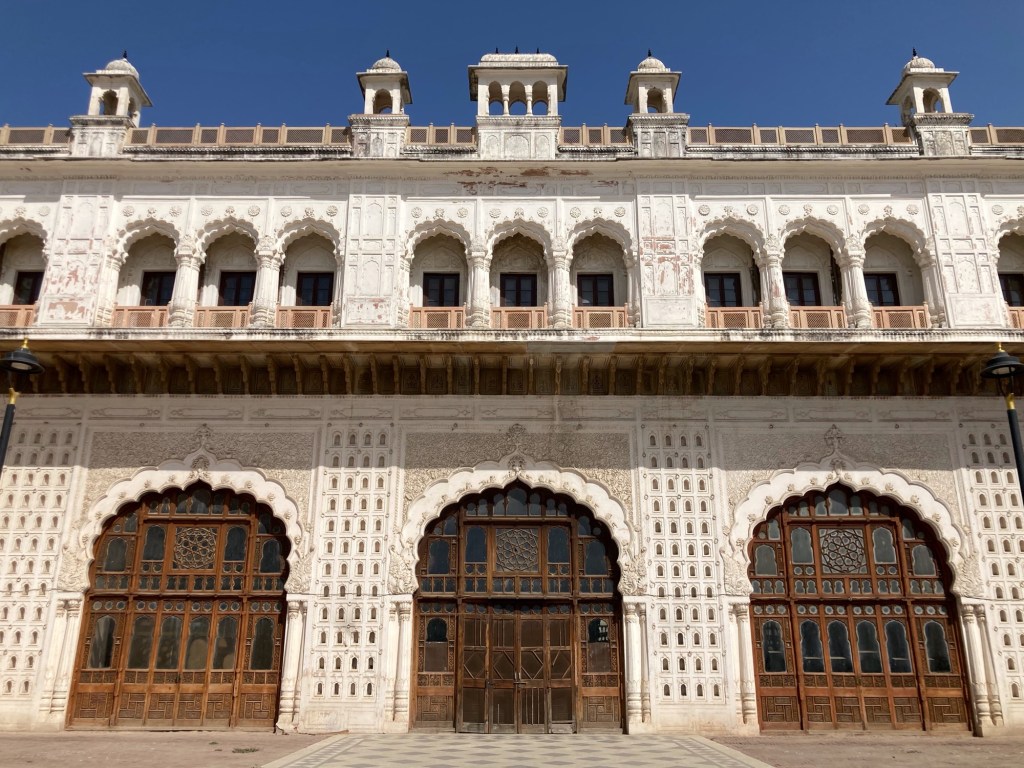
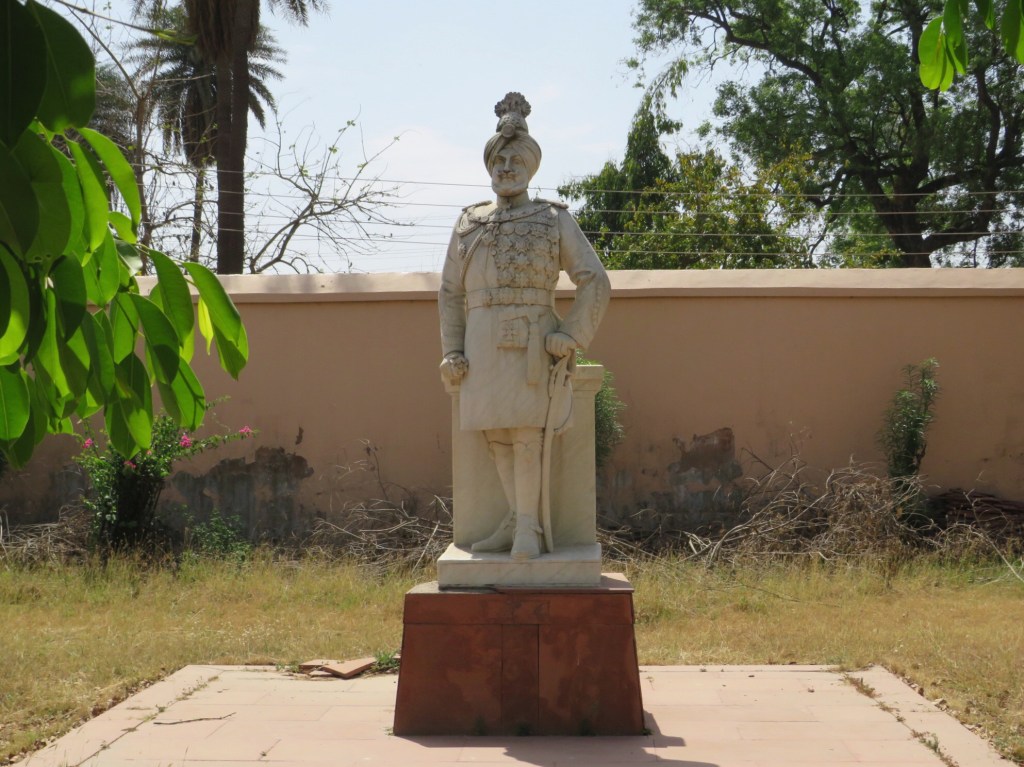
The other breathtaking building in Patiala is the Sheesh Mahal (Palace of Mirrors), once part of the Moti Bagh, the palace of the Maharajas of Patiala. The Maharaja, at the time of the Raj, was apparently a British collaborator. He did quite well for himself – for a while. There’s even a statue of Queen Victoria in the garden.
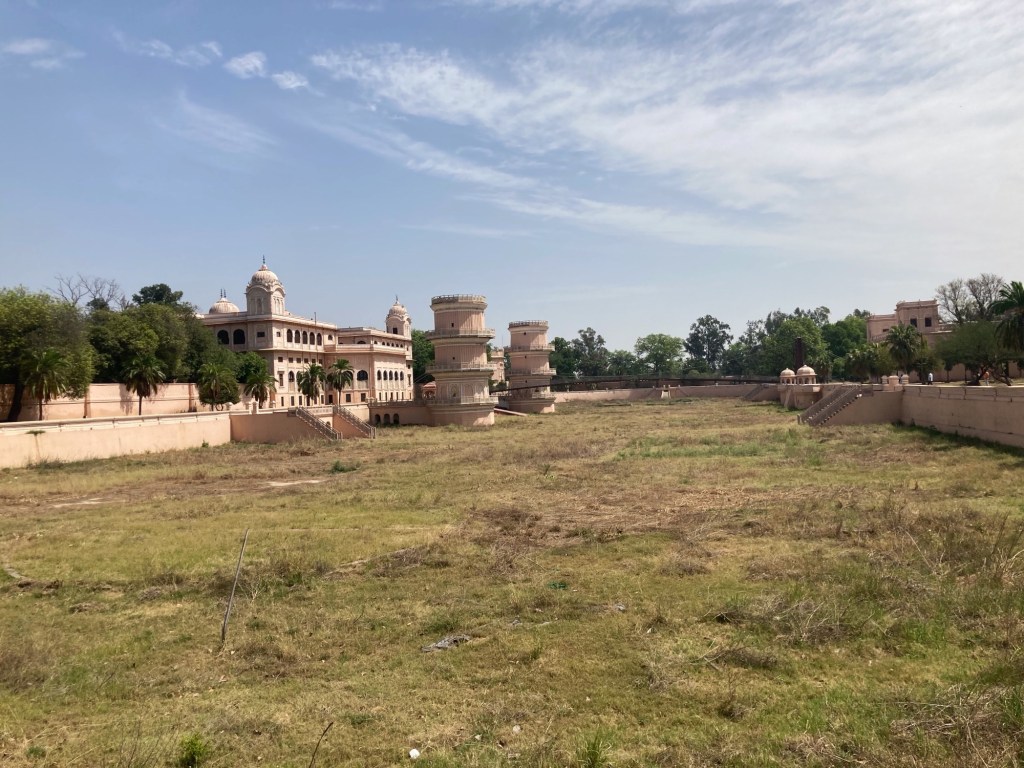
The pretty pink Sheesh Mahal is abandoned now. There used to be a lake but now it’s just an empty field of grass. It’s quite bizarre. As if one day they were promenading around the lake in their finery and then everyone just disappeared.
For all the things that remain the same in India, there have been some changes. You still can’t drink the water but there is fast food, Uber, wifi and female rickshaw drivers.

Since 1947, the Attari-Wagah border is the only border crossing open between India and Pakistan. They close the border every evening with an elaborate ceremony. Its part military chest-beating, part comedy and part Bollywood Musical. As foreigners on the Indian side, we got to sit in the VIP seats, right next to the gate.
You can’t see much of the Pakistani side through the border fence but it looked a lot more low-key. We did see this one-legged guy hop up to the gate on crutches, then throw his crutches away and start twirling. We’re like “Whaaaat”! He twirled and twirled but I only managed to capture a moment. I hope to get a closer look from the other side. Bring on Pakistan!
 Adventurous Hermit
Thanks Jeanne, another brilliant blog. ❤️💜
LikeLiked by 1 person
Thanks Michelle xxx
LikeLike
Just incredible! Such a tangible taste of your travels. That border closing ceremony is so out of kilter with what we hear from media etc. again incredible. Thanks so much JS xxx
LikeLiked by 1 person
Thanks Birgitte xxx Yes, things are often so different in real life!
LikeLike
Great to be reading another travel blog from your travel adventures Jeanne 😊
I have such fond memories of India & last time spent a bit of time in Chandigarh, hard to believe that was over 14 years ago. You make me want to go traveling again. Thank you x
LikeLiked by 1 person
Thanks Val! A shame we didn’t manage to catch up last time but definitely next time x You seem to get out and about quite a bit 🙂
LikeLike
Beautiful words Jeanne – you warm my heart and inspire my spirit of adventure. Thankyou darling .xxx
LikeLiked by 1 person
Thanks Kazzy xxx
LikeLike
such a great intro to India Jeanne. It looks fabulous. Love the handshake at the end of that very elaborate border closing.
LikeLiked by 1 person
Thanks Dorte 🙂. Haha, yes me too.
LikeLike
Hi, please keep blogging. Your journeys are always fascinating. India is on my list of travel destinations. So much to see and experience.
Stay safe and enjoy.
Much love,
Julianne xx
LikeLiked by 1 person
Thanks Jules x Yes! You must go. Much love back to you ❤️
LikeLike
Thanks Jeannie, so lovely to hear from you and to read your blog. You write beautifully. Your words bring these places to life.
All well here in Orange. Bob and I can’t wait to read more ?? ________________________________
LikeLiked by 1 person
Thanks Liz ☺️. Glad to hear all’s well with you and Bob x Hopefully, I’ll manage another post soon!
LikeLike
Thank you for your wonderful descriptions and imagery. Brings back Lovely memories and a longing to return to India. Safe travels to you both and thanks again xx
Christine McFadden
LikeLiked by 1 person
Thank you ❤️
LikeLike
It would be all too easy to get caught up in the politics of India. I chose,as you forwarned I would to just absorb the environment and I did just that. You didn’t give much advice, just the best advice. Go,Be,and what I need to learn will come. And,indeed it did. Jeanie,thankyou.
LikeLiked by 1 person
I’m so glad you did Deb x
LikeLike
Fantastic blog Jeanne! The hermit with many talents. Brought back a lot of fond memories of lndia. Keep them coming. Pete
LikeLiked by 2 people
Thanks Pete x Hope to catch you in Europe 🙂
LikeLike